This post is maintained by Bytebase, an open-source database DevSecOps tool. We update the post every year.
| Update History | Comment |
|---|---|
| 2024/09/11 | Initial version. |
| 2025/05/27 | 2025 Update. |
| 2025/12/04 | Add TablePlus and DBHub. Remove Outerbase (acquired by Cloudflare). |
| 2026/02/03 | 2026 Update. Update DataGrip and Vanna.ai with major new features. |
This is a series articles about SQL Clients / SQL Editors:
- Open Source SQL Clients
- Text-to-SQL Query Tools (this one)
If you work with databases, SQL AI tools can significantly improve your productivity and efficiency. They help generate SQL commands automatically from natural language input and optimize query performance as functional and starter-friendly tool.
Here we gathered some of the most popular SQL AI tools (Text2SQL) on the market in 2026.
DataGrip
JetBrains introduces an AI Assistant to its flagship SQL client DataGrip.
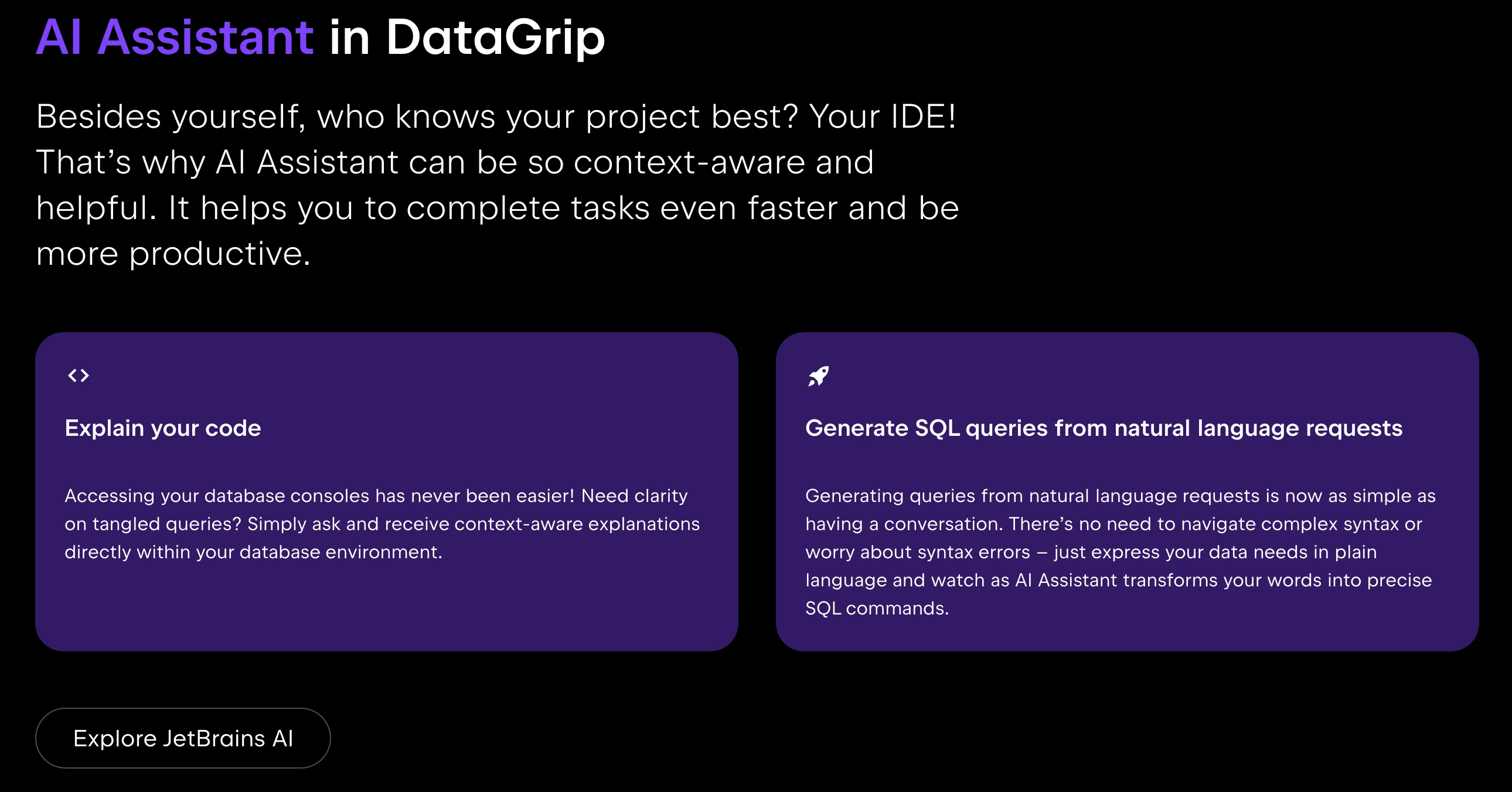
The DataGrip AI Assistant can:
- Request queries and information using natural language.
- Explain complex SQL such as stored procedures.
- Optimize schema and SQL.
- Compare DDL of two database objects.
- Fix SQL mistakes.
- Format and rewrite SQL.
In 2025, JetBrains significantly enhanced the AI Assistant:
- Schema and object context: Attach specific database objects (tables, views) to AI chat for more precise responses, not just the whole schema.
- Execution plan analysis: AI can explain query execution plans and suggest optimizations for better performance.
- Cloud-based code completion: Leverages cloud resources for more precise autocomplete, including single lines, code blocks, and entire scripts.
- Cloud database integration: Connect directly to AWS, Azure, and Google Cloud accounts to browse and connect to databases.
- Free tier and local models: A free tier offers unlimited local completions, and you can connect OpenAI-compatible local endpoints (Ollama, LM Studio) for offline use.
TablePlus
TablePlus is considered by many as the best SQL client on Mac. It's a modern, native database management tool that supports multiple databases. It has integrated text-to-SQL AI capabilities to help developers generate queries from natural language.
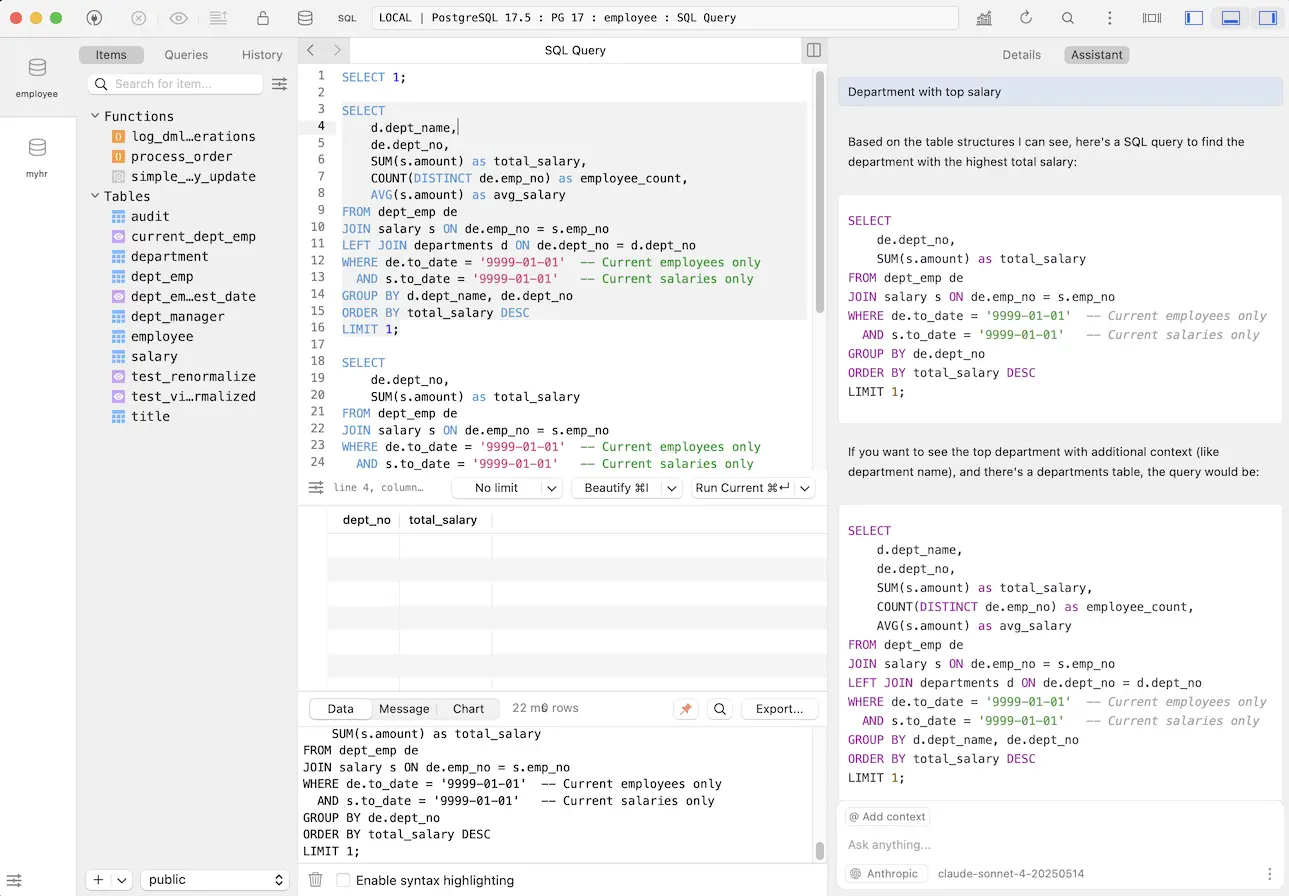
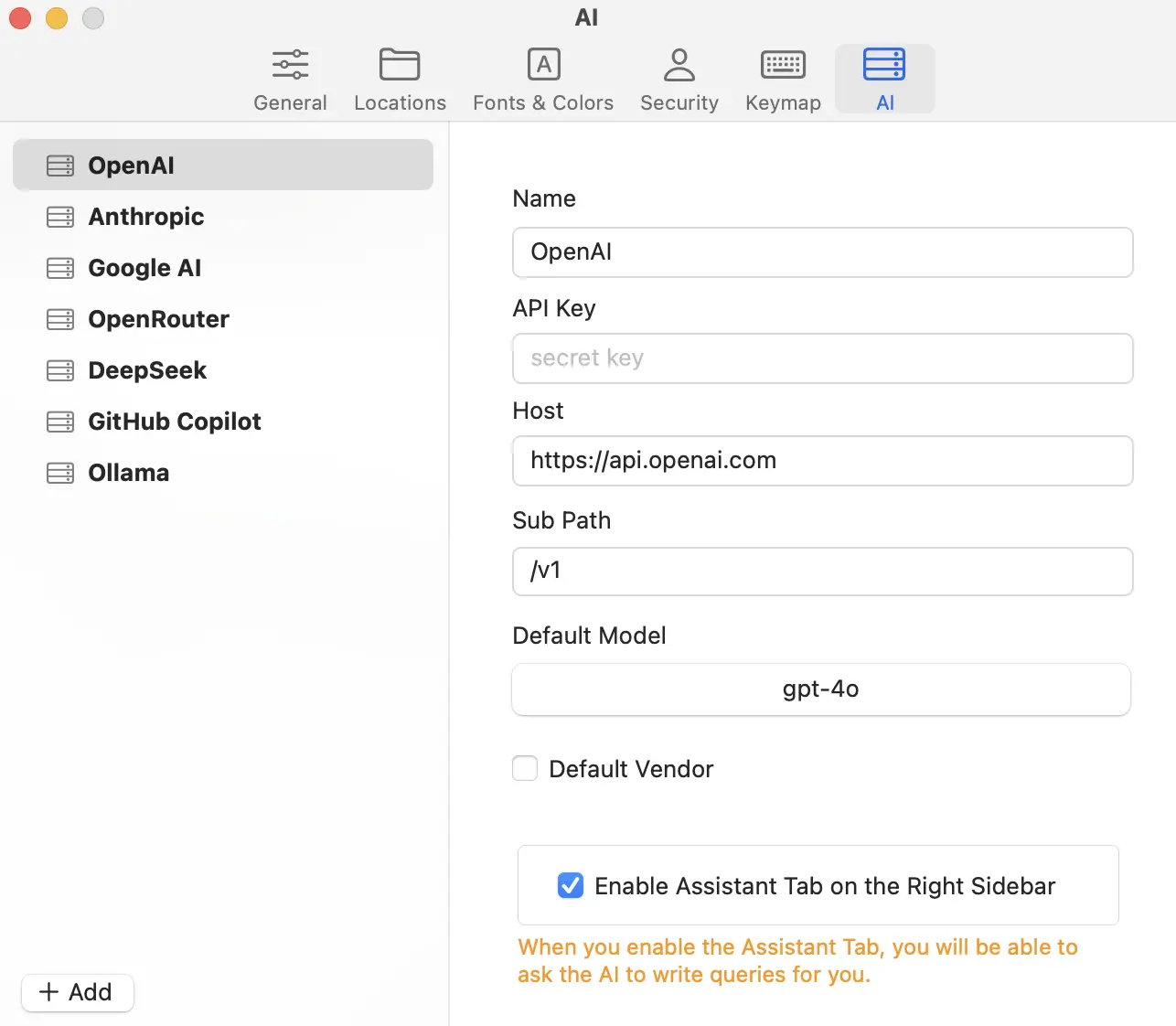
Unlike DataGrip which charges an extra price for its comprehensive AI Assistant features, TablePlus follows a BYOK (Bring Your Own Key) model, allowing you to pick your preferred LLM provider. While it only provides text-to-SQL generation rather than the full suite of AI features offered by DataGrip, this approach gives users more flexibility in choosing their AI backend.
SQL Chat
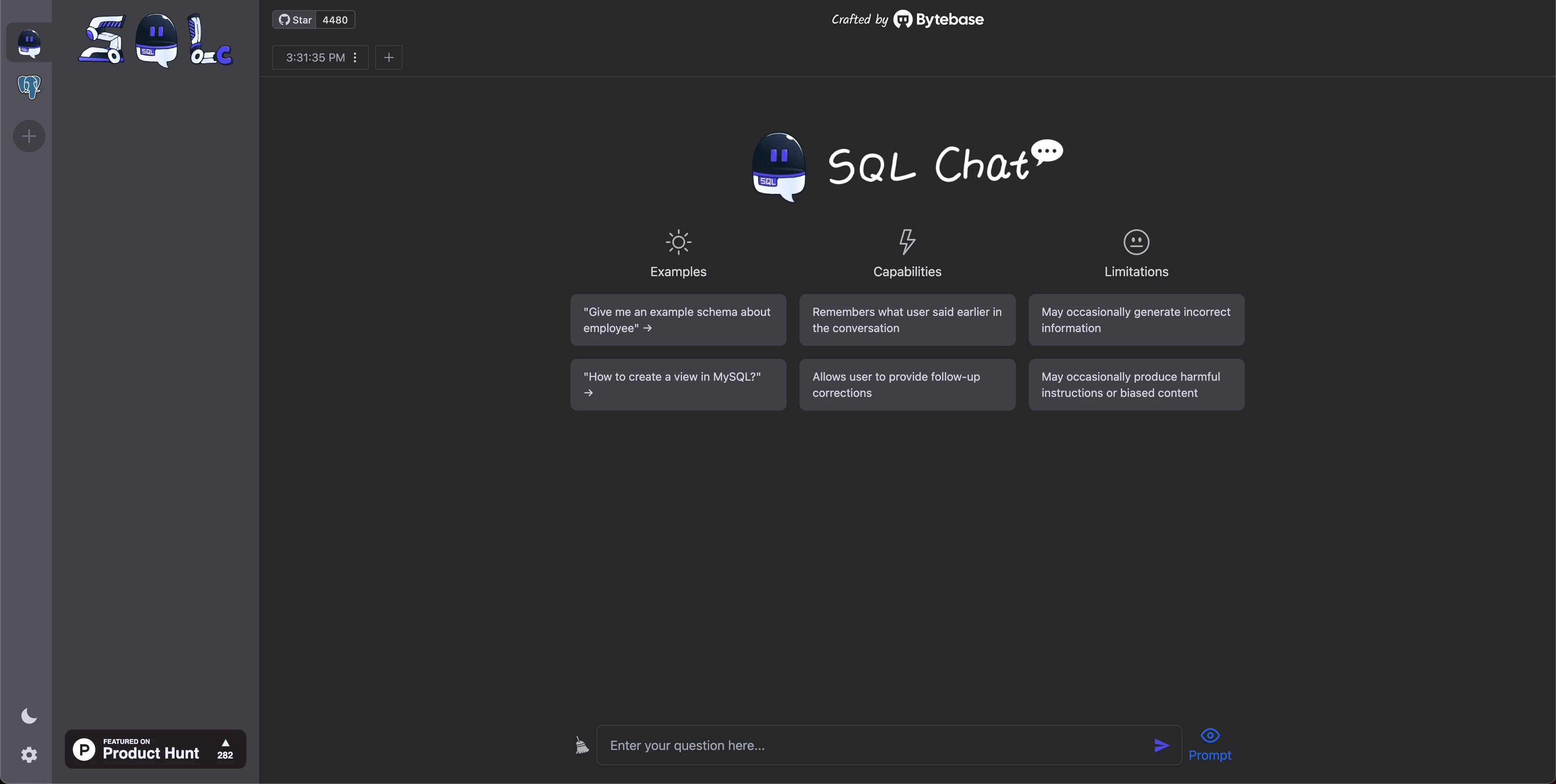
SQL Chat is a chat-based SQL client, which uses natural language to communicate with the database to implement operations such as query, modification, addition, and deletion of the database. Instead of navigating across many UI controls, SQL chat applies a much more intuitive chat-based interface, bringing more flexible and comfortable user experience.
SQL Chat supports the following databases and will add more over time:
- MySQL
- PostgreSQL
- MSSQL
- TiDB Cloud
Vanna.ai
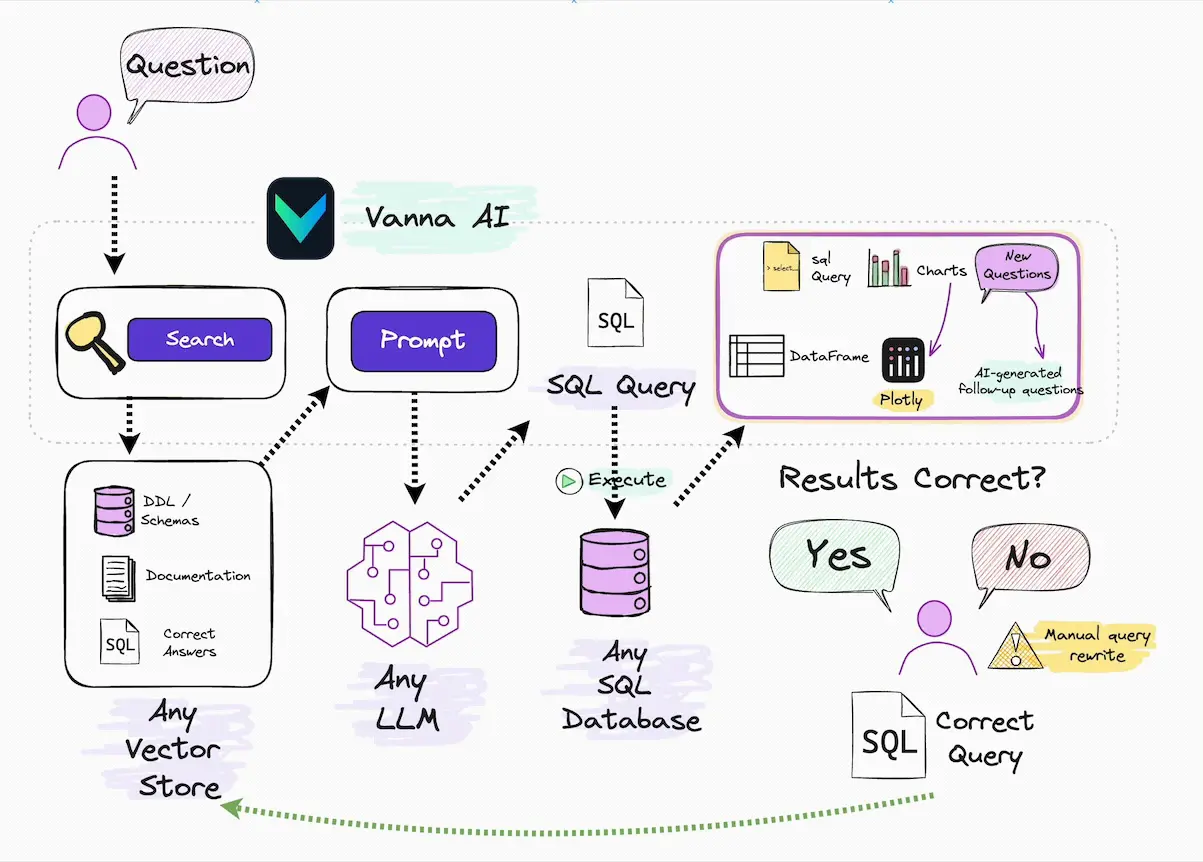
Vanna.ai is a personalized AI SQL agent that transforms natural language questions into actionable database insights. In late 2025, Vanna released Vanna 2.0, a complete architectural rewrite that evolved from a simple SQL generation library into a production-ready, user-aware agent framework.
Key features of Vanna 2.0:
- Agent-based architecture: New Agent-based API replacing the legacy VannaBase class methods, with better support for agentic models like Claude 4.5 and GPT-5.
- User-aware components: Identity flows through every layer with user context automatically available in tools, SQL queries, and audit logs.
- Enterprise security: Row-level security with queries filtered based on user permissions, group-based access control, and comprehensive audit logging for compliance.
- Web-first approach: Built-in
<vanna-chat>component and server with streaming and rich UI components. - NVIDIA NIM integration: Accelerated inference using NVIDIA NIM microservices for improved performance.
The platform supports major databases including PostgreSQL, MySQL, Snowflake, BigQuery, Redshift, SQLite, Oracle, SQL Server, DuckDB, ClickHouse, and more. For LLMs, it supports OpenAI, Anthropic Claude, Google Gemini, Azure OpenAI, Ollama, and others.
SQLAI.ai
SQLAI.ai is divided into several SQL generators, each serving specific purposes:
- Explain SQL Queries: Offers explanations with summaries, output visualizations, and detailed query breakdowns.
- Format SQL Query: Formats SQL queries for improved readability and reduced error-proneness.
- Analyze Your Data: Allows you to upload CSV data and ask AI questions.
- Generate SQL Query, Fix SQL Queries, Optimize SQL Query, etc.
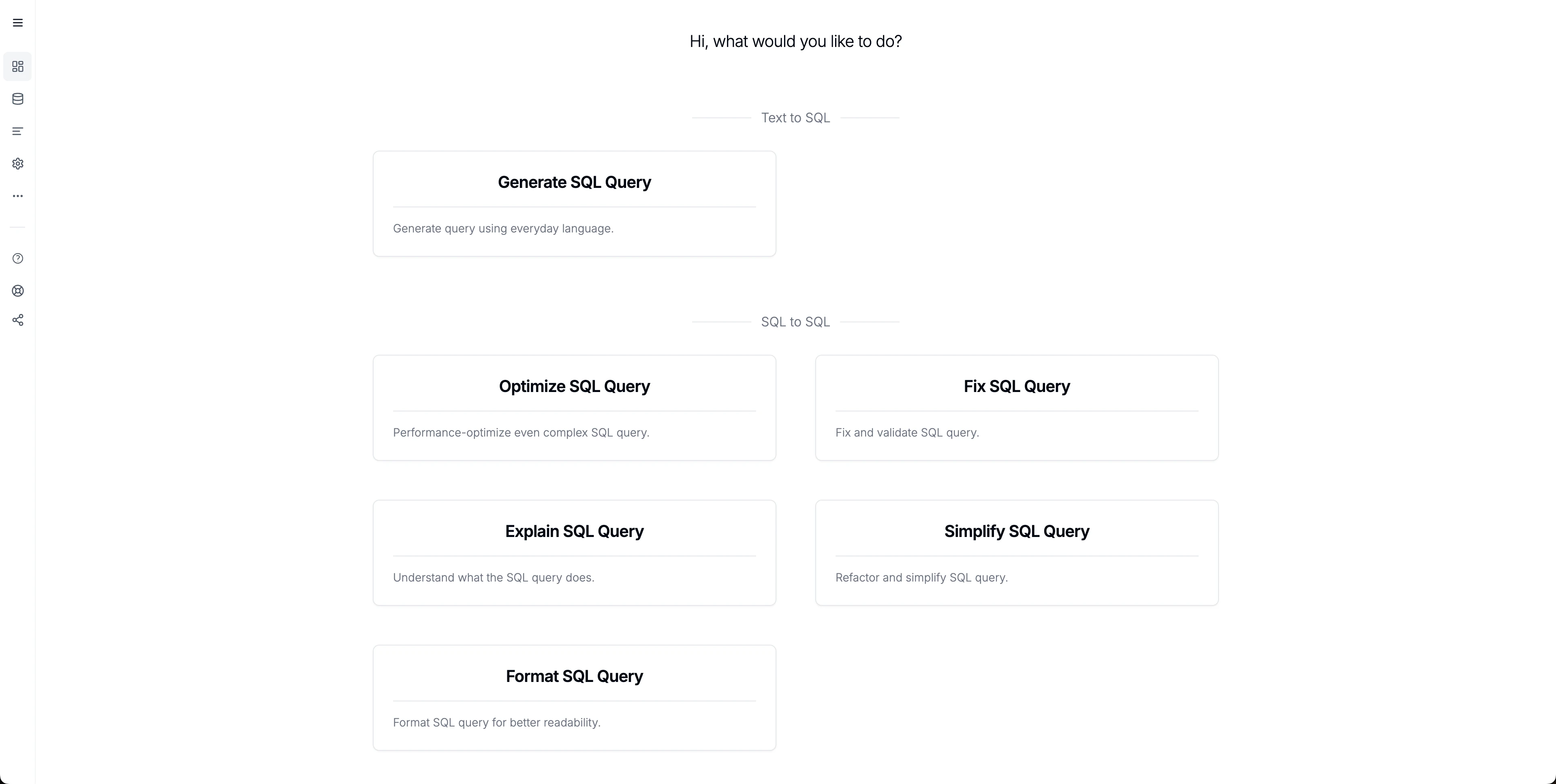
In addition to the core generators, SQLAI.ai includes tools to facilitate your work. The available tools vary depending on the generator.
Honorable mention
Postgres.new
Postgres.new is an WASM-based in-browser PostgreSQL sandbox with AI assistance. It allows users to operate with PostgreSQL directly in a web browser, without having to install or set up the database locally.
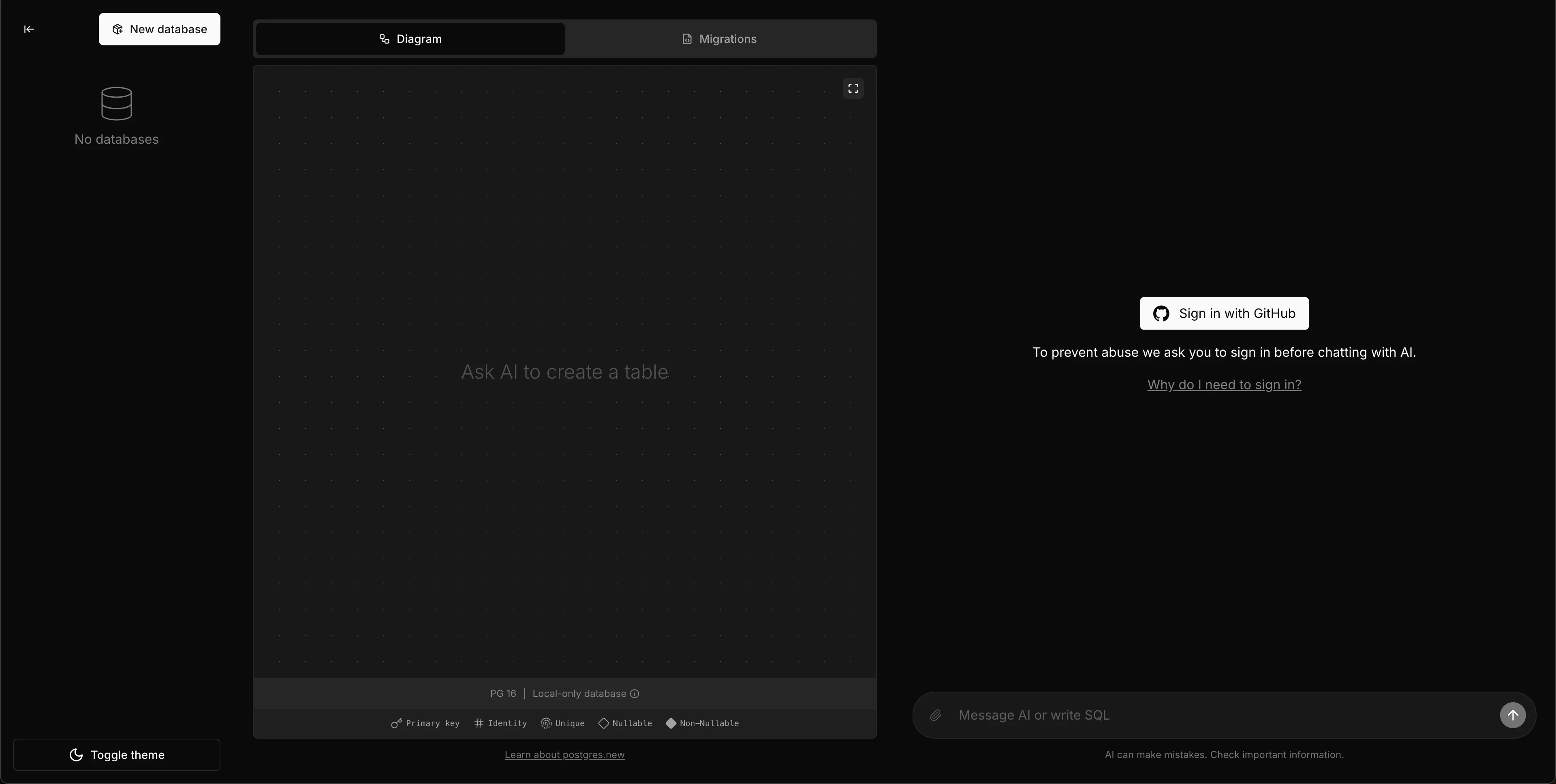
Postgres.new is currently in early alpha with limited functionality. It may have limitations compared to a full native PostgreSQL installation.
DBHub (MCP Server)
Unlike standalone SQL clients, DBHub brings text-to-SQL capabilities directly into your existing development workflow through the MCP standard, eliminating the need to switch between tools.
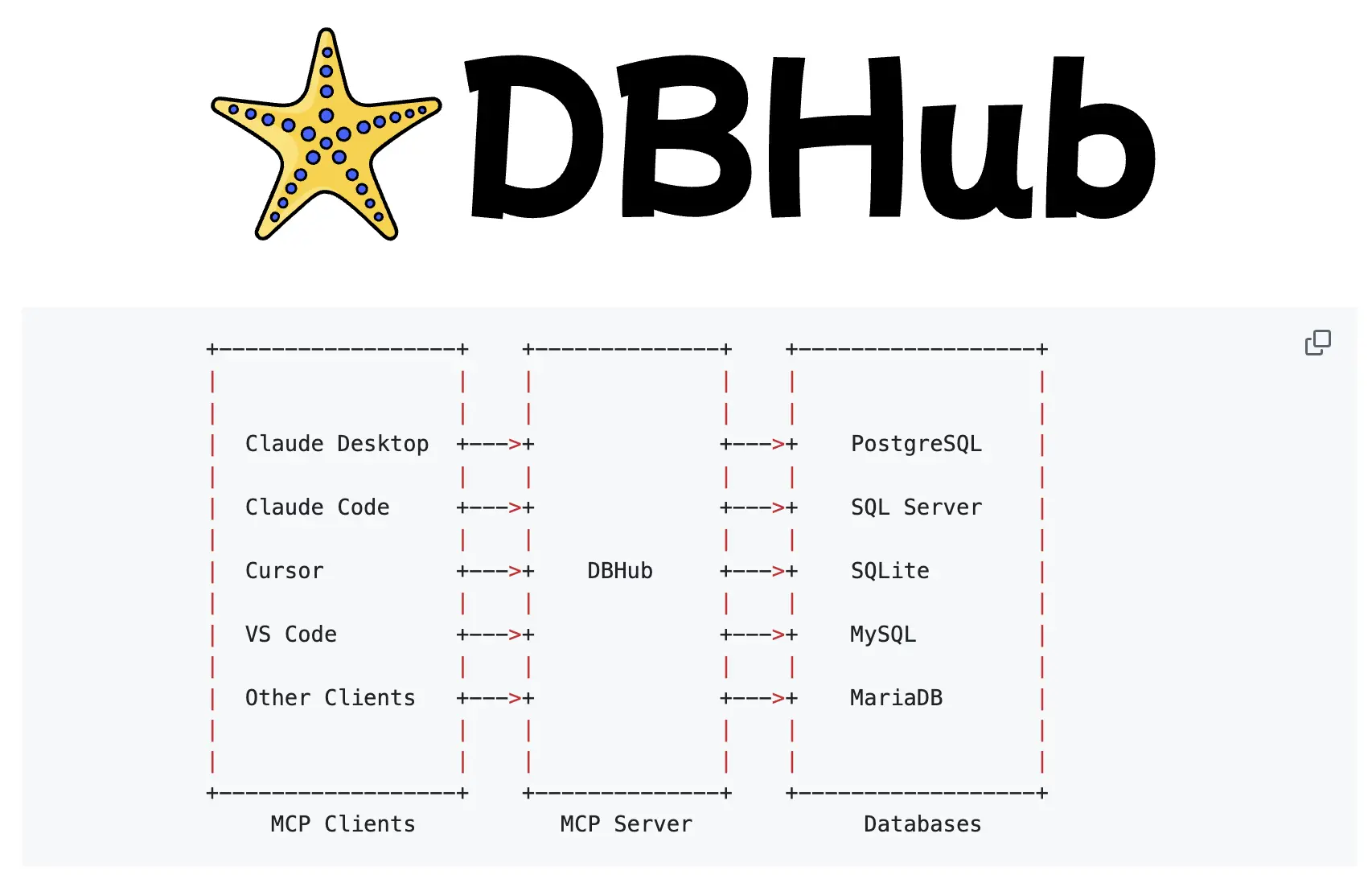
DBHub is a universal database MCP (Model Context Protocol) server that enables any MCP client such as Claude, Cursor, VS Code, and Codex to have text-to-SQL capability. It acts as a bridge between AI assistants and databases, allowing developers to use natural language to query and explore their databases directly from their development tools.
Since its release in March 2025, DBHub has grown to over 100K downloads and 1.7K GitHub stars. It supports multiple databases including PostgreSQL, MySQL, MariaDB, SQL Server, and SQLite. Key features include:
- Custom tools: Define reusable, parameterized SQL operations in configuration files.
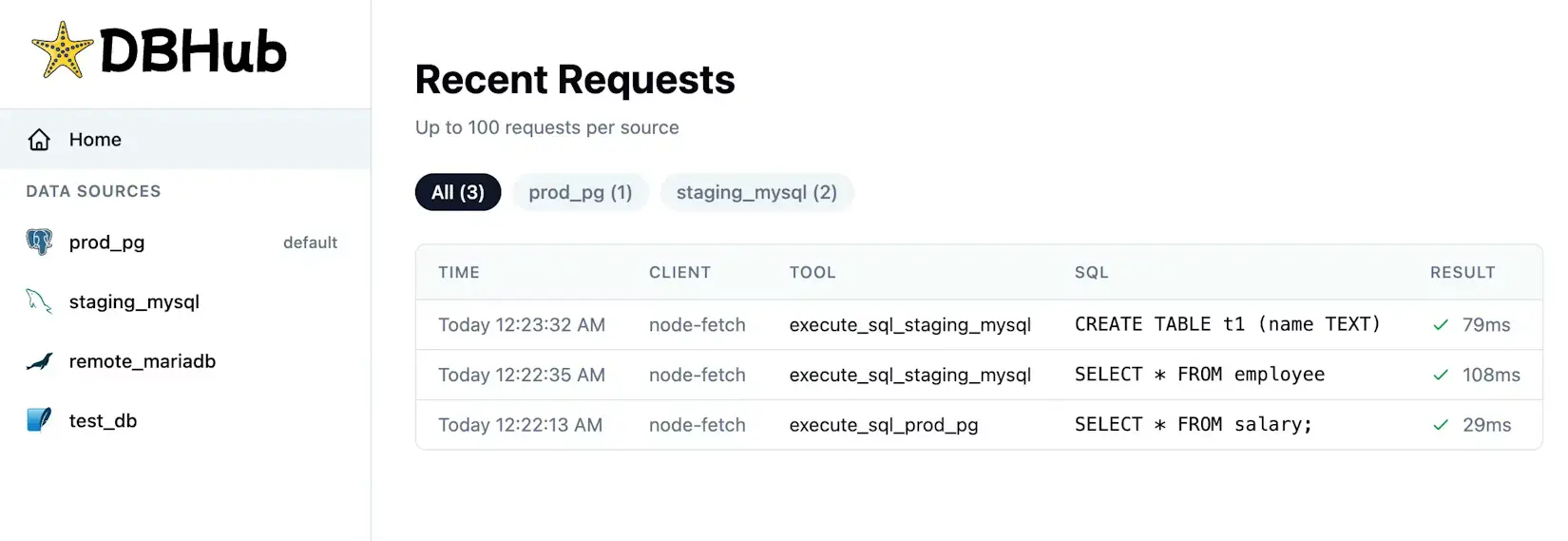
- Built-in web interface: Visual way to execute queries, run custom tools, and view request traces without requiring an MCP client.
- Security-first design: Read-only mode and safety controls to prevent accidental data modifications.
Compared with other database MCP servers, DBHub comes with an admin console to view configured data sources and trace SQL requests.
Techniques and Benchmarks
Cloud hyperscalers are increasingly integrating Text-to-SQL capabilities across their database offerings. Google Cloud, for example, has rolled out this feature to BigQuery, Cloud SQL, and AlloyDB, and recently published guidance on effective AI prompting techniques for SQL generation. Meanwhile, the research community has developed evaluation frameworks like BIRD-Bench to measure Text-to-SQL accuracy.
Security Considerations
When Anthropic launched MCP in November 2024, Postgres was among the original reference implementations. However, a vulnerability discovered by Datadog in 2025 exploited the original implementation—the server wrapped queries in read-only transactions but accepted semicolon-delimited statements, allowing attackers to bypass the read-only protection. Anthropic has since archived the vulnerable repository. When evaluating MCP-based database tools, prioritize implementations with robust security controls like proper query parsing and read-only enforcement.
Text-to-SQL tools improve efficiency and make it easier to interact with databases. Although they use state-of-the-art LLM models, the results may sometimes be inaccurate. If you want to use them in production, make sure to double-check before you hit RUN.